![German Vice Admiral Graf Maximilian von Spee's cruiser squadron, leaving Valparaiso, Chile, on November 3, 1914, following the Battle of Coronel. [In Focus]](https://i0.wp.com/www.theatlantic.com/static/infocus/wwi/global/l_02.jpg)
German Vice Admiral Graf Maximilian von Spee’s cruiser squadron, leaving Valparaiso, Chile, on November 3, 1914, following the Battle of Coronel (In Focus).
— World War I in Photos: A 10-Part Series By Alan Taylor.
German Vice Admiral Graf Maximilian von Spee’s cruiser squadron, leaving Valparaiso, Chile, on November 3, 1914, following the Battle of Coronel (In Focus).
— World War I in Photos: A 10-Part Series By Alan Taylor.
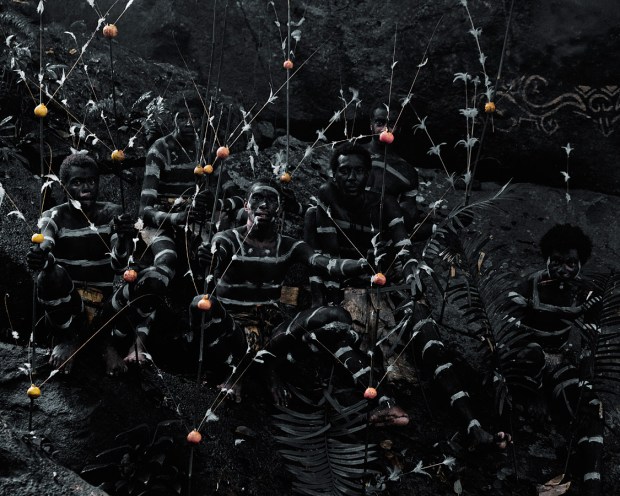
— Jimmy Nelson: Before they pass away.

— Pieter Hugo: a global graveyard for dead computers in Ghana.

— Tuca Vieira: social inequialities through urban landscape.

— Edward Burtynsky: exploring the residual landscape.
Training in social science, which presumably fills your head with social science theories, will not necessarily improve the social science content of your photographs. Knowledge does not automatically shape what you do, but works only when it is deliberately put to work, when it is consciously brought into play (Becker, 2000).
— Becker, H. (2000). Photography and sociology.

 Álvaro Román